Are They the Best Class Ever? An (Imperfect) Statistical Analysis of the 2020 NBA Hall Inductees- Part 1

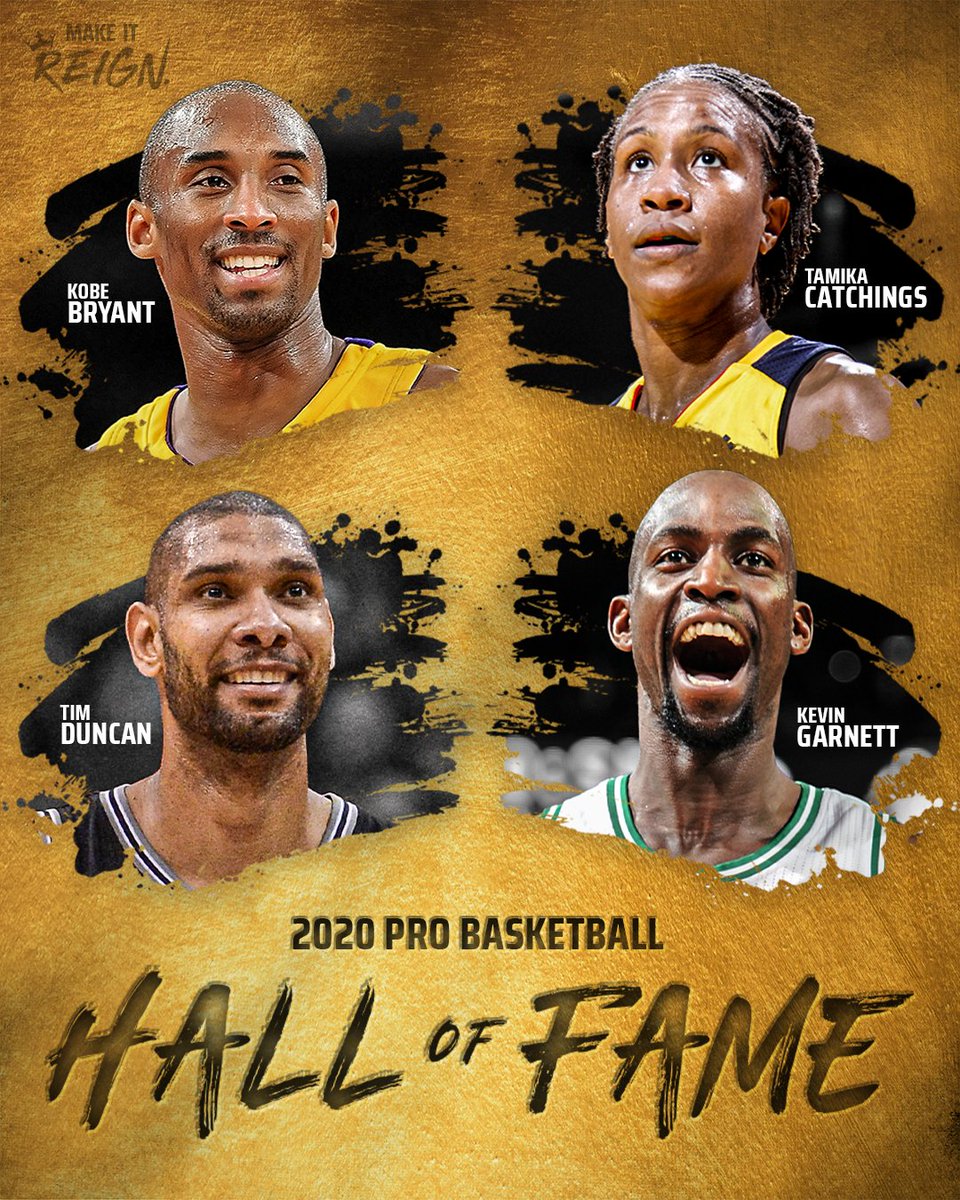
I hope that the nine individuals that will be inducted into the Naismith Basketball Hall of Fame in 2020 will get the fanfare that they deserve. On Saturday the Hall of Fame announced that three men’s and one woman’s player, (Kobe Bryant, Tim Duncan, Kevin Garnett and Tamika Catchings, respectively) along with four coaches (Kim Mulkey, Barbara Stevens, Eddie Sutton and Rudy Tomjanovich) and one Olympic executive (Patrick Baumann) will be inducted into the Hall of Fame, with the induction ceremony scheduled for August 29th.

Given world events, that feels like an eternity from now. As COVID-19 casts a shadow over everything in its wake, I want to take a moment to appreciate the four players that are planning to be inducted into Springfield this summer.

Naturally, there is one other albatross to mention among this, and this is the untimely death of one of those beloved inductees, Kobe Bryant. So, while this announcement could be considered doubly somber, I’d rather evoke the competitive spirit that was so deeply embedded into Bryant’s game and attitude. Ultimately, basketball and its other professional sport relatives are about entertainment through competition, and while the show can’t go on for real right now, we can always talk about it like it is.

With that being said, this particular group of players is a special one. Of course, all Hall of Fame inductees are the best of their time, but a group that in this case consists of these four is one that could be argued to be one of the best Hall of Fame classes of all-time.

I mean, let’s just look at their combined accolades:

58 All-Star Appearances (Bryant with the most, 18)

51 All-NBA/All-WNBA appearances (Bryant and Duncan tied at 15 total appearances, but Bryant had 11 1st teams to Duncan’s 10)

51 All-Defensive Teams (Duncan with 15, but Bryant and Garnett were first team 9 times, meanwhile the WNBA only has one team, so all 12 of Catchings All-Defense awards are essentially first team)

6 Defensive Player of the Year Awards (Catchings had 5 of these, I don’t care that she’s a woman, she might be the best defender out of this whole group)

6 All-Star MVPs (Bryant had 4)

6 Finals MVPs (Duncan had 3 of these)

5 season MVPs (Duncan had 2)

4 rebounding championships (all Garnett)

2 scoring titles (Bryant)

12 Championship rings (5 for Bryant and Duncan each)

I can’t even imagine how much hardware that is. Beyond this, if you were to mold the four of them into one player and get aggregate statistical averages for them as this one “super-player” their averages would be:

20.1 Points Per Game

8.6 Rebounds Per Game

3.8 Assists Per Game

1.3 Steals Per Game

1.3 Blocks Per Game

0.218 Win Shares Per 48 Minutes

That’s quite the player. Averaging 20/9/4 is quite the feat for any one individual let alone four of them combined over the course of their careers including the high and low points of those careers. In NBA history, 68 players have averaged 20 PPG in their careers, and only five of those players also averaged at least 8.5 rebounds and 3.5 assists (Chris Webber, Charles Barkley, Kareem Abdul-Jabbar, Karl Malone & Wilt Chamberlin). Only Webber also averaged 1.3 steals and blocks (and probably Chamberlin, but they didn’t track those stats in his time). This group of 4 is in rarefied company when you also consider that aggregating their numbers against each other should dilute them a little bit. Yet, here they are, setting a standard that was incredibly difficult to replicate.

Initially, I was going to look at playoff stats as well to include in their resume, but in all my time and effort I came to the conclusion that actually, there is very little statistical difference in any of the samples that I have taken between regular season and playoff numbers. For that reason, you will just have to take my word for it, and trust that while certain players do rise to the occasion at times, for this longer analysis of full careers, that distinction just isn’t necessary.

I mention this because, I really wanted to bring some historical context to this Hall of Fame class. Just how good are they? Really, how do they stack up to other classes of their kind?

Looking back through the history of Hall of Fame inductions I only found four classes that I thought might possibly be comparable. Admittedly, this wasn’t very scientific and to be frank, I’m just doing my best. Take everything I write here as the opinion of an enthusiastic and knowledgeable sports fan, do not take it as information from a professional statistician, because I’m not one.

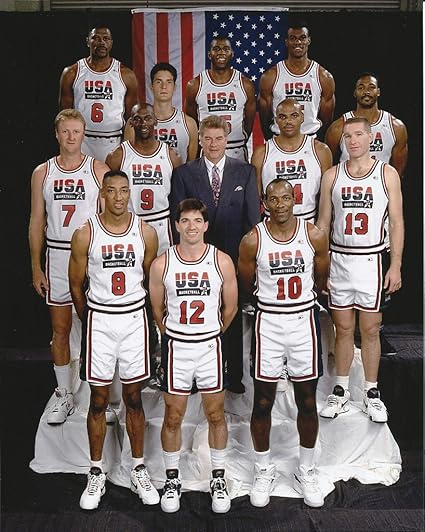
Anyway, I scanned the list of all Naismith Hall of Fame classes and came up with four possible competitors. Remember, I am speaking strictly about players. Its only too obvious that the Dream Team being inducted as a unit is more prominent than the 2020 Hall of Fame class. Further, every group I am going to mention is going to only have 3 players in it, and therefore will be at a disadvantage. For that reason, I will be factoring in a stat I just created called “Accolades Per Player” or APP, which is exactly what it sounds like. It is an average of how many each class had of each award per player.

Let’s get to the first candidate.

Class of 1980: PG Oscar Robertson, PF Jerry Lucas, G Jerry West.

33 All-Star Appearances (11 APP vs. 14.5 APP for 2020 Class) (West led with 14)

28 All-NBA Appearances (9.3 APP vs. 12.75 for 2020) (West, 12)

5 All-Defensive Teams (1.6 APP vs 12.75) (West had all 5)

0 Defensive Players of the Year

5 All-Star MVPs (1.3 APP vs 1.5) (Robertson led with 3)

1 Finals MVP (0.3 APP vs. 1.5) (West)

0 MVPs

1 scoring championship (0.3 APP vs 0.3) (West)

7 assist championships (2.3 APP vs 0) (Robertson, 6)

3 Championship Rings (1 APP vs 2.75) (each had one)

The only thing that this group is actually even close in terms of accolades is All-Star MVPs as they have a total of 5, with the Big O having three of them. Outside of that, they also have 7 assist championships (also mostly Robertson), something the front-court heavy 2020 Hall of Famers didn’t accomplish at all. Lastly, West matches his protege Bryant in terms of having one single scoring championship. Unfortunately, none of their other award totals stack up.

As far as statistics, the league didn’t start recording steals and blocks until the last year of this group’s careers, so those won’t be available to me, however, their per game averages are still quite interesting. The 1980 class averaged:

23.5 Points Per Game

9.3 Rebounds Per Game

6.7 Assists Per Game

0.189 Win Shares Per 48 Minutes

It seems like that means that they would blow this years class out of the water statistically, especially when you consider that two guards were part of a group that out-rebounded two of the most dominant big men of the recent era. However, the pacing of the game needs to come into play as well. In this 1980 group’s median season, which would have been the 1967-1968 season, there were a total of 137.9 shot attempts per game (field goals and free throws combined). In comparison, in this year’s class’s median season of 2006-2007 there were a total of just 105.8 shots per game. That means that shot attempts, and therefore opportunities to either score, rebound or assist were coming at a rate of about 30% more for the 1980 class (I couldn’t account for the first shot of two free throws on this, so its not exact, but its relatively close). If you then normalize the 1980 class’s stats to those ’06-’07 rates you would get:

18.0 Points Per Game

7.1 Rebounds Per Game

5.1 Assists Per Game

0.189 Win Shares Per 48 Minutes (not altered)

This suggests then that the 2020 Hall of Famers were indeed more statistically gifted, albeit by a small margin.

However, this is just the beginning. Now that I have established my parameters and given an example of how this analysis will work I plan to jump right into the data and details next time. There are yet three more Hall of Fame classes to compare to this newly anointed 2020 class. How will the likes of Maravich, Barkley, Robinson, and the great Michael Jordan stack up?

Stick to this space to find out.

Where to Turn as COVID-19 Takes Our Games Away… Its all Digital These Days

It’s a quiet and bleak time in the world of sports. As all non-essential workers have been asked to step away from their work lives, the universe of professional sports has been put on pause. I’m sad to say that my previous prediction of how the athletic part of our society would react to the outbreak of COVID-19 was incredibly naive. Players, facility workers, fans and so many more await the day when our favorite pastimes will be back, in the name of public health.

In the meantime, distractions are hard to come by. Nearly every headline heard or read is about the pandemic taking hold of our society, physically and mentally. At a time where we could really use a pleasant distraction, a time that I’ve heard compared to World War II, in terms of global efforts, we are missing one of the biggest pleasantries that our civilization provides.

So what is a sports fan to do at a time like this? Where is our refuge?

The obvious solution for the sports fan is the bevy of classic games that sports networks have been showing. Just this past Saturday ESPN hosted “K Day”, a tribute to some of the best strikeout performances in recent ESPN baseball history. That same day NBA TV aired multiple NBA Finals match-ups from the summers of 2013 and 2014 between the San Antonio Spurs and Miami Heat. These nostalgic re-watches are great, but not without fault.

The problem, as perfectly described by Ben Lindbergh and Sam Miller this week at the baseball podcast Effectively Wild, is the predictability of these outcomes. I have a friend who watched Kerry Wood’s 20 strikeout performance as part of “K Day”. Naturally, he knew exactly what was going to happen. I knew who was going to win the Finals games before I even made the decision to continue watching them. Sometimes familiarity is great. Statistics show that people genuinely enjoy watching re-runs of television shows, but at some point the monotony of classic games will kick in. They leave something to be desired. I think I may have the answer for that.

In so many ways, even before this global incident, our lives have become digital. That has only become exacerbated now. We are seeing a digital revolution not occur before our eyes, but become reinforced as “work from home” now is now more than just an option for some, but a lifeline. Dine-in delivery is now our way to eat out and support local business at the same time. As so many of us find ourselves away from friends and loved ones, we are now more than ever trying to connect through the web using entities like Skype, Zoom, and social media.

So why can’t the answer to our great sports absence be digital as well? There’s no doubt that sports video games have been a big part of professional sports’ marketing scheme since licensing agreements first became prominent in the 1990s. Personally, I still remember the majority of 1998 MLB rosters due to the countless hours of playing Major League Baseball featuring Ken Griffey Jr. for Nintendo 64.

Alas, I used to be a more dedicated sports gamer in the past than I am now. Case and point, my most recent version of Sony’s MLB the Show is the 2017 version, but in lieu of any actual live baseball to be watched, I found my own way to watch it. Setting up post-season mode in the game, I am having a replay of the 2017 post-season, to assuage my baseball-tooth, not playing the games, but just letting the computer play them against itself. This gives me the opportunity to make dinner or take care of chores in the living room. Much like what I would have done if the Indians had picked up their schedule this week in real life.

I am far from the only one to come up with this solution though. Not long after it was announced that Utah Jazz center Rudy Gobert had COVID-19, and the NBA season was shut down indefinitely, the Phoenix Suns announced they would be playing the all missed games using the NBA 2k20 video game. True to form, they’ve played every game to date using varying methods. They’ve had a member of their 2K League team play as the Suns, and players like Devin Booker and Frank Kominsky have also taken over the sticks. More recently, that same 2K League player, Antonio Salvidar played host to the game along with a member of the Washington Wizards 2K League team as the game was controlled in full by the CPU. Lastly on this past Friday, the Suns radio play-by-play team called the action as the digital Suns took on and defeated the digital Philadelphia 76ers at the hands of real life small forward Mikal Bridges.

Meanwhile, baseball-reference.com is using the PC game Out of the Park Baseball to simulate this season’s games for its stats pages. Even better, my own home team of the Cleveland Indians can now actually be watched through the miracle this year’s iteration of MLB the Show. A grassroots effort started at the Indians’ Reddit page has produced a digital version of the Indians schedule, fully watchable live or after the fact on Twitch TV. One of the members of the subreddit is producing the season day by day as the schedule should have progressed. Full disclosure, I am watching Game 3 of the season right now as I type this and the Indians find themselves tied with the Tigers in the top of the 4th.

I was able to ask the gentleman behind this effort, an IT Director by day known online as thewarsquirrel about what possessed him to put on the games.

“I guess from my perspective, I’m in the same boat as many of the fans of MLB in general. You spend the whole off-season looking forward to what is to come in the season,” he explained, “and it’s just a really great way to pass the time.”

Not to be outdone, he also mentioned missing the sense of communal experience that comes with being a sports fan among other enthusiasts. He stated, “You miss out on that chance to commiserate or celebrate throughout the season. It’s really the community that does it for me. So my goal with these streams is to bring that anticipation back into play a bit, give us all a way to escape for a short while, and feel that excitement or frustration as the season progresses.”

Lastly, in terms of hopes for this project he is modest, yet ambitious claiming “My biggest goal, is just to get more people gathered around watching it, and hopefully build it into more of a social event, just like if these were real season games…. I think once we have a consistent core of followers who are engaged for the most part, it’ll be easier to expand it.”

The best part is something that Mr. Squirrel eluded to himself. I don’t know how this game I’m watching will end. I don’t know how this season will end. The wind could be completely out of my sails by this time next week if the Indians get off to a slow start, but at least I am watching an impartial game that could have any realistic outcome. As a testament to games like 2K and The Show, they’ve become so realistic, and so true to form, they can be used for this exact purpose. I may be without real life baseball, but I got darn close to the next best thing. They really are simulators at this point.

And then there’s yet another step towards simulation. Last week, NASCAR introduced us to iRacing. NASCAR itself is simulating its racing season using a computer simulator that real-life drivers often use for practice. The debut came last Sunday as Denny Hamlin squeaked past Dale Earnhardt Jr. in a lively finish at Miami-Homestead Speedway. It was the most watched “e-sport” on television ever.

Not only has NASCAR decided to continue the season with its iRacing Invitational, but Fox Sports plans to broadcast the races in full, including today race won not by a regular driver on the physical circuit, but a 674-time winner on this digital one, Timmy Hill. In a time where we don’t get to see many of our most talented athletes perform, this is likely as close as we are going to get with the best of the physical competing with the best of digital. And you know what? For what it is it seems pretty darn good.

For now, we all just need to hold together. Our games will be back for real soon enough, but much like this current public health crisis is changing our lives, it very well could change our sports. Maybe we will see a day where the climate change effects of auto racing lead us to full-time simulators. Maybe the time we are in creates the marriage that entities like sports leagues and video game companies have been looking for between sport and E-Sport. Maybe this is just the best distraction we have right now and we just can’t wait for life to change back to normal, whether or not normal really exists

Only time will tell, but for now, the 7th inning is about to start and its still scoreless. Let’s see if the Indians can rally late.

The Three At-Bat Minimum: A Crazy Idea to Up Interest in Baseball (its different than the three batter minimum)

A lineup card from Game 6 of the 2017 Word Series. It will all make sense in a second.

Watch enough well-pitched baseball games and eventually you will hear something similar to:

“Mike Clevinger was stellar today, pitching a complete game shut out. He allowed just one hit and one walk over 9 innings, but was the benefactor of two double play balls. He faced the minimum.”

“The minimum.” For those that may not already know, the minimum refers to the fact that at the very least a baseball team will bat through its lineup three times during a nine inning game. The context above is when you will currently here about it; when a pitcher completes a game in such a way that he faces no more hitters than may be required, but does not pitch a perfect game. You can also hear that the pitcher faced “x number of hitters more than the minimum”, usually to emphasize he didn’t face that many more.

I have an idea that I think could potentially make baseball a more popular game in America, and it focuses around this idea of “the minimum”.

Before I go any further, I want to be very clear. If baseball were a political spectrum I would likely be considered a baseball moderate. I love that the American League and National League deviate on the designated hitter rule. I enjoy that baseball has unwritten rules that so many find to be antiquated, but at the same time think the game could sometimes afford to get with the times. There’s nothing wrong with some moderate show-boating on a home run, but at the same time, I understand if the pitcher feels a certain type of way about said show-boating.

What I am about to suggest is far from a moderate point of view. I like the rule I am about to propose theoretically, but might feel differently in practice. Its radical, but I think its worthy of suggestion despite the fact that I am still also work-shopping it as a concept. At this point, I want to reveal it even though maybe I’m still not fully confident in it.

As of this season, whenever this season happens to start, we will have a three batter minimum for pitchers. As such, pitchers are required to pitch until they at least face three batters, or the inning ends, except in cases of injury. What I suggest today is the three at bat minimum.

Currently, Rule 6.01 of the MLB rule book reads as follows:

(a) Each player of the offensive team shall bat in the order that his name appears in his team’s batting order.

(b) The first batter in each inning after the first inning shall be the player whose name follows that of the last player who legally completed his time at bat in the preceding inning.

I suggest we change the rule to what is below. The actual changes are in bold.

(a) Each player of the offensive team shall bat in the order that his name appears in his team’s batting order. For a minimum of three trips through the batting order.

(b) The first batter in each inning after the first inning shall be the player whose name follows that of the last player who legally completed his time at bat in the preceding inning for the same three trips, after which the offensive team may create a new batting order for any subsequent inning. This order may be altered on an inning by inning basis.

To put it more clearly, once a team hits through your batting order three times they may change their batting order to whatever they would like at the beginning of any following inning. A new inning means the opportunity for a new batting order.

I will await the vitriol from baseball fans that are more purist than me. How could I possibly suggest such a thing?

Its a rather quite simple equation of excitement and marketability.

Baseball today finds itself often playing third fiddle to both football and basketball in the United States in terms of popularity. One major reason suggested by fans, players, and experts is that MLB needs to do a much better of job marketing its players. This is true. There are many great talented personalities in this game coming from a wide variety of backgrounds and perspectives. MLB and the players themselves could do well to sell their talent much better than they do today.

I believe though that there is an inherent problem in the game that its more popular brethren don’t contend with. Part of the game itself is its own Achilles heel. A simple comparison will bring it to light.

Game 7 of the 2019 NBA Eastern Conference Semi-finals between the Toronto Raptors and Philadelphia 76ers may have been the best basketball game of last NBA season. In a winner-take-all match-up neither team led by more than 4 points in the last 4:30 seconds of the game and with the exception of a deep 2-point basket by Philadelphia’s JJ Redick (a prolific shooter from deep) and a missed three pointer by Toronto’s Serge Ibaka each shot attempt in the final stretch was taken by an All-Star level player. Stars controlled the close game late. This culminated in the most memorable moment of the season, then Toronto star Kawhi Leonard’s fall-away from the right baseline that hung on the rim for what seemed like eternity before falling through the net. Toronto won in dramatic fashion, 92-90 and would go on to take the Larry O’Brien trophy.

This is the brunt of my argument. Basketball puts itself in a position where when the game is on the line you know the ball is going to a team’s best player. Michael Jordan was made Michael Jordan in part by “the shot”. In short, if there is the possibility for a memorable moment down the stretch, the fans are going to get their money’s worth. The opportunity to make a difference is going to find its way into the hands of the game’s stars. The same can be said for football. If the Kansas City Chiefs are down four points late, best believe the ball is going to be put into the hands of Patrick Maholmes. For better or for worse, the fans get to see greatness work under pressure at every opportunity.

Now imagine if “the shot” never happened because it wasn’t Jordan’s turn to shoot. What if it was Fred VanVleet’s turn to have the ball in his hands for Toronto with the clock running down? What if the Chiefs were required to run the ball every other play? Think about how many memorable moments we would miss if such rules existed. This is how baseball works.

Going into the top of the 9th of Game 6 of the 2017 World Series the Los Angeles Dodgers faced elimination at the hands of the Houston Astros. The Dodgers led 3-1 that night as the Astros took their last turn at bat from Chavez Ravine with the bottom third of their order, including the pitcher’s spot due up. Rather than have the privilege of being able to bring the eventual World Series MVP (George Springer), a two time All-Star (Alex Bregman) and reigning Most Valuable Player (Jose Altuve) to the plate, Dodgers closer Kenley Jansen faced Marwin Gonzalez, a utility-player having a career year, Josh Reddick, a defensive-minded outfielder also having a career year, and Carlos Beltran, a 40 year-old pinch-hitter in the last at-bat of his career.

Game 6 0f the 2017 World Series featured no losing team highlights in the 8th or 9th innings of this highlight reel. Would that be the case with the three at bat minimum?

All of the now apparent Astros cheating aside, think about the lost opportunity for baseball that was this 9th inning. The Dodgers, with one of the best closers in the game on the mound were able to avoid facing some of the best hitters in baseball with the tying run on the on-deck circle. This could have been a magic moment of epic proportions for the game of baseball, or at the very least Houston could have increased the drama of the moment by bringing their best to the plate. Instead, the Astros went down without a whimper, even if they would eventually go on to win the Series.

In short, marketing of stars is inherent in basketball and football. In baseball it isn’t. The three at bat minimum would both use the game to promote its stars and manufacture the type of drama that could bring more interest to both its biggest stages and random evening games in June.

Yes, there is a bit of inherent democracy in the way baseball is currently played, and yes, there is value to that. I am not suggesting this concept is something that should be absolutely abolished and that is the reason why teams would wait until they have hit through their order three times to re-start their lineups. Everyone still gets at least three at bats. This allows us to avoid a ridiculous amount of stat-padding that would entirely throw statistics out of whack in comparison to historical context, and would still cause managers to have to weigh offensive value against defensive prowess for their starting lineup.

In relation to the pitcher’s spot in the National League, I think that while the rule should not require the starting pitcher to hit three times, it would require a pitcher in general to hit three times. This, along with the fact that a team will more often want to save its best relievers for late in games, will encourage managers to have their starting pitchers pitch deeper into games. Not only will this increase the profile of prolific starting pitchers, it will also keep the continual parade of fire-throwing middle relievers from turning the game into a slog, and will increase offense. Further, offense will also be inherently increased by having the games best hitters hit more often. If offense really is tied to fan interest, we will ultimately prove it this way.

Additionally, with relief pitching becoming more prominent over the past five decades, defenses have benefited from specialization. We have seen that advantage continue to increase over time while the rules have continued to restrict offense. Rather than secretly juice the ball or players, what better way to even the playing field and draw more attention to your game than ensure the best players hit with the game on the line? The average MLB game last season saw about 38 plate appearances per team. With 27 being “the minimum” that would suggest that teams could start re-ordering lineups in the 7th inning on most occasions. Good offensive play would provide more opportunities and and poor play lead to less.

Lastly, strategy, which is always worshiped by baseball purists, could also see an increase under this new system.

Its the 8th inning and your team is down by 1 run. Do you send your best three sluggers to the plate and hope just one of them can run into a pitch over the middle of the plate? Do you send your best on base guy to the plate to lead off and try to get him around the bases? Do you have your speedster lead off and try to wreak havoc? What if you are the team nursing that one run lead? Then what strategy do you use for insurance runs? What does the opposing team try to do with their pitching in order to counteract these varying lineups? How important is alternating left handed and right handed batters in these late inning situations? What about bigger deficits? What provides the best opportunity to come back from three runs down? The questions barely have an end!

I understand this is a big change to implement that alters a large part of the spirit of baseball, but a change of this magnitude isn’t unprecedented. Another bat and ball sport, cricket, created a variation of itself, Twenty20, in the face of complaints about its pacing. The changes have made faced much popular fanfare all over the globe. Also, basketball has toyed with the “Elam Ending”, even having this year’s NBA All-Star game not end based on an arbitrary clock, but by playing three timed quarters and then playing the fourth quarter until a predetermined score is exceeded. It received rave reviews.

This could be baseball’s opportunity to modernize itself while still keeping its soul. This is the opportunity for Mike Trout to reach his full potential as an American sports mega-star. This is the opportunity for starting pitchers and closers all around the game to make themselves into some of the biggest names in the league. Interest abounds in this 3 at bat minimum rule.

One hundred years ago in the wake of the Black Sox scandal, Babe Ruth revolutionized baseball by becoming the first player to try to drive the ball in the air and hit home runs. This game has always evolved with the times, and kept itself relevant in the lexicon of American history. Maybe my suggestion is just the nudge it needs to stay there.

Or maybe I’m completely out of my mind.

A Post About NBA’s Schedule Suspension- A Shocked Sports Fan’s Perspective

I am so frustrated right now.

Some of what I am about to say might come off as short-sighted or selfish, I understand that. I want to make it fully known that I totally understand and ultimately accept the decision that the NBA has made tonight.

NBA games are officially suspended following the conclusion of tonight’s play due to the COVID 19 coronavirus outbreak. Utah Jazz Center and Defensive Player of the Year Rudy Gobert has contracted the disease, likely a major impetus for this decision.

Clearly, some things are more important than sports.

Its only been a few months, but I think writing in this space has given me a new appreciation for how enthusiastic I am about these children’s games that are so embedded in our culture: I have watched, followed, read about them, listened to them or about them, and crafted my own thoughts and opinions with new vigor. It really hit me while I was writing my piece on Kobe Bryant’s tragic death, and really, its hitting me again today.

Starting tomorrow, there’s no NBA games to watch. There are totally supposed to be NBA games to watch, but there aren’t. LeBron isn’t coming to town on Friday. Who knows how long this will last? There might not be a Finals this year.

And now that the NBA has come to this decision they may have set a precedent. NCAA March Madness is already planning a spectator-less tournament as well. Will they cancel altogether? Will the MLB and NHL follow suit now and suspend operations? Are we all doomed to be sports-less for the foreseeable future? Am I really not going to have my games and teams to watch on the regular? And I thought my YouTube TV debacle was bad!

Clearly, some things are way more important than sports.

I had already begun to become annoyed by the pervasive media coverage about this disease. Yahoo.com is my homepage on my PC. The first 8 articles on their main page are corona-related.

Allow me to be clear, informing people is of the utmost importance. The news should absolutely be reporting and providing coverage.

Its been everywhere. Its dominated headlines. Its dominated work meetings and idle chatter around the workplace. Its dominated phone calls and conversations with friends and family. Its dominated our ability to go out in public without having to think you might catch a disease.

And now personally, its come for what is easily one of my favorite, pleasant distractions on this Earth, trying to strike a resounding blow against the cultural institution that is American professional athletics. I absolutely can’t stand it. I don’t want it to be the case. I want the show to go on!

Clearly, some things are way, way more important than sports.

I don’t know what else to say. I know its temporary. I know its the right thing to do. I know its for the benefit and safety of the players, staffs, and general public at large for this hiatus to happen. Maybe it would be better if I knew the full plan. If the MLB and NHL just made announcements one way or another on the status of their schedules. that would be great. If NBA Commissioner Adam Silver came out tonight and said the league will start back up next November, at least we would have closure. Unfortunately, diseases labeled pandemics by the World Health Organization don’t work on a schedule and coordinate with their potential victims. They don’t negotiate and they don’t collectively bargain.

Truthfully, maybe what’s so unsettling is that we have absolutely no control over any of this except for our own actions. This whole time I’ve been trying to live my life as normally as possible, not letting the news get me out of my routine. Tonight’s news is routine-changing, whether I like it or not.

Clearly, some things are more important than sports… or our routines.

Everyone out there, wash your hands often and thoroughly. Be smart about the time you spend in public. If you have a fever, don’t leave home unless you are going to a doctor. The vast majority of young people out there that contract COVID are going to be just fine, but please mine your elders, both directly or indirectly. You never know who could catch what you have simply on accident.

Simply put, be mindful of what’s to come, both for yourself and those around you. May the largest tragedy you face in this outbreak be that you can’t sit down after a good day’s work and enjoy TNT’s NBA Thursday night.

After all, some things are more important than sports.

The Roller-Coaster That Is Just Trying to Watch Your Team’s Games in 2020

I breathed a really big sigh of relief Thursday night. After much trepidation caused by the roller-coaster that has become Major League Baseball broadcast rights, I found out yesterday that I will indeed be able to watch my Cleveland Indians play baseball on television this season.

Allow me to explain.

Like many (especially younger) people, I don’t have cable in my household. However, unlike some in my demographic, I still find the value in being able to tap into live television. Its absolutely imperative for the sports fan, of course, but further, I legitimately still enjoy the idea of being able to turn on a device and find something airing that I hadn’t considered in advance. (“Oh, look… reruns of Law and Order are on, I’ll put them on while I make dinner…” you get the idea).

Regardless, I continue my foray as a consumer of traditional television now by holding a subscription to YouTube TV. This is after previously having subscribed to the now defunct Sony platform, PlayStation Vue. Sony pulled the plug on at the end of this past January and also sold rights to YouTube TV to advertise to old Vue subscribers. Sony then put together an app that allows YouTube TV to run from my PlayStation 4. Beyond this, my own research suggested that YouTube TV was the most comparable service on the market to my beloved Vue, and I decided to try it out. Its been quite adequate over the month or so that I have had it, but probably a half of a notch lesser quality than Vue was. Overall, things seemed like smooth sailing. I’ve got all the channels I need and more at a comparable price and my wife is happy with our selection too. All is hunky-dory.

Even more recently however, I found out that Sinclair Broadcast Group, who bought every Fox Regional Sports Network in a transaction with Disney not but 8 months ago, had failed to renew their partnership with YouTube TV. This includes both Fox Sportstime Ohio and Fox Sports Ohio, home of the Indians and Cleveland Cavaliers, respectively (and Columbus Blue Jackets and Cincinnati Reds for those in that market). My chances of watching either team suddenly looked dashed. All this time and effort put into figuring out what service to select, based on price point and freedom of choice? Wasted. The deadline date came and went. Some disgruntled users presumably canceled their YouTube TV subscriptions. Or at least threatened to. I decided to assess my options but be patient. These things can work themselves out sometimes after all, and long story short, they did. In the process there was quite the scare for users that included running past the expiration date, figuring out a temporary extension to the current agreement and then finally coming to a new deal Thursday, that admittedly still leaves out 2 Regional channels in New York and Los Angeles. For me at least, all’s well that ends well, but I could’ve done without the drama.

The fact of the matter is, when it comes to these type of television distribution deals, don’t expect the drama to go away anytime soon. Since I was a child I remember seeing running crawls on NFL games about how I need to call my cable company and make sure I don’t miss out on getting to watch my local team. Fans and viewers have always been beholden to the leagues and their distributors and I don’t see that changing. In fact, I see it getting worse. Why? One word: streaming.

Streaming is supposed to be the great game-changer. Netflix, Hulu and the like have changed the world of television. They have given us more high-quality choices for a manageable price and they done it in a way that’s convenient for the viewer. Its an incredible business plan.

For sports, streaming is just one more variable that the leagues can bargain against their other distributors in order to raise their leverage. Most people would welcome the ease of access that could come with a streaming option for their favorite teams. I’m just not so sure its going to work that way. I look at the way that the leagues are currently delving into digital streaming as a perfect example of why.

The NFL is the only remaining American sport that has nearly all of its games on the major local networks. Other than ESPN’s Monday Night Football, and a handful of Thursday Night games on the NFL Network, if you want to see the NFL you can find it with something a simple as an antenna. In return, the NFL is a ratings goldmine for the networks as well. Its the most watched sport in America. It partially keeps CBS propped up as the country’s most watch network. The NFL isn’t leaving TV any time soon. That much is clear.

However, the NFL does stream certain prime-time games through Amazon. The league isn’t convinced that the tech companies are ready for a full slated schedule, but naturally there’s another pot of money to be made in streaming rights, so expect this access to grow, but grow slowly. The fact of the matter is that if you want to stream the NFL you can… as long as its a select game that you may or may not have interest in. You’re better off not wasting your money and just watching on television, hoping that the NFL doesn’t end up making certain games stream-exclusives like MLB has in the past.

Which brings us to MLB. Manfred and co. have actually opened up the ability for the teams themselves to sell their own in-market streaming rights. This is a great step forward for a league that is generally behind the times, however the outlook isn’t entirely rosy. Out of market games will still require an MLB.tv subscription, a great service if you happen to not live within shouting distance of your favorite team, but otherwise usually fairly uninspiring. MLB has instructed teams to treat their streaming rights like they treat their broadcast rights; essentially decentralized. The Indians could decide they want to stream their audio broadcasts through Spotify, while the Athletics could (and actually have) decided to stream their radio broadcasts through their own audio station. The Orioles could decide they want Amazon to stream their video broadcasts. You get the idea.

But what does this all lead to? If I want to just watch the Indians, maybe I will be able to stream them. It would be a subscription of some sort that I can pay for and access at my leisure. But, that’s assuming the Indians decide to stream video. Its also known that teams are going to have to negotiate with their Regional Sports Networks to adjust their respective contracts since the TV networks won’t be getting every single eyeball anymore. Maybe some teams will strike deals with their current RSNs and keep their streaming services behind paywalls still tied to cable (like the Fox Sports Go app). There’s no guarantee we will be able to pay one flat rate for one small subscription to watch our one favorite team. That’s not to mention that watching out of market will still be tied to MLB.tv for hundreds of dollars, or will still require cable (or an additional streaming service) to watch the Saturday Game of the Week or Sunday Night Baseball on Fox or ESPN.

The point I am trying to make here is that the lack of uniformity in the strategy to move to streaming is going to create more trouble than its worth. If I want to watch Netflix’s Stranger Things, I don’t have to tune into CBS to watch episode 1 and Netflix for episodes 2 through 5 and then a regional network that might get taken off my cable package at any moment to see the remaining episodes. I go to just 1 place and all that I could want is there for me, and more.

Music is another perfect example of this. The music streaming industry has been panned for exclusivity deals between artists and services. Its an incredible technology, but it reaches its true peak when there aren’t business restrictions involved. That’s how streaming (and really, the internet) is supposed to work, and that’s how these sports leagues are likely to botch it. This mistake won’t harm themselves though, they are going to make money hand over fist through their new media but for us- their fans, we will suffer.

The only chance we have (well, 2… the XFL is crazy enough that they might get this right too) is the NBA. They’ve already delved into streaming in some minor, but significant ways. USA Basketball’s run through the 2019 FIBA World Championships was hosted on two web services: ESPN+ and Twitch.tv. Twitch has hosted G-League games as well and is the home of the NBA’s 2K E-Sport league. For those particular products, there’s been no splitting of distribution through completely different services or mediums. Further, the NBA recently signed on with DAZN for its Spanish broadcast rights, leaving a 25-year partnership with Telefonica , a Spanish telecommunications group, in the process. They have immersed themselves face first in a streaming service, and while it wasn’t in America, everyone knows the NBA takes its international footprint very seriously.

The icing on the cake is Commissioner Adam Silver speaking to podcaster and writer Bill Simmons at the 2019 MIT Sloan Sports Analytics Conference and talking directly about a direct to consumer streaming option for the league’s future (the entire interview is below and really worth a listen, streaming information is around 1:01:00 mark). Silver directly mentions the idea of being able to log online and buy particular games, or even particular quarters or waning minutes of games for a flat rate. If you want to watch Cavs vs. Bucks in full, go for it! You’ll probably be able to subscribe to it. If you get done with that contest and you notice Pacers-Bulls is a close game down the stretch, the final 5 minutes can be accessed for say, $1.99. Maybe you can buy a bigger subscription package with access to more games as well. The potential is there, and Silver is publicly talking about the opportunities at his disposal. This is promising, but will take time. The NBA’s television deal with Turner and ESPN doesn’t end until 2023, and the NBA has local television rights taken care of by the team themselves, who knows if they will balk the idea of losing their deals.

Lastly, the NHL will be the first proving ground here, but they likely won’t be a very good one. Their television deal ends with NBC in 2021, but they have yet to really delve into digital streaming at all. Their first step is probably to take a page out of the NFL’s book and start streaming some prime-time affairs. Beyond that, there isn’t much movement.

The NFL will come quickly after them though, and that will be the first true test of how the era of new media will really fair in sports. If any of these leagues can nail it by simplifying and creating convenience for their consumer they stand to make a huge impression on fans old and especially new. Its not a surprise the most popular league with young people is positioned best to take the reigns, but still I’m not sure any of these leagues can look past that next big pay day enough to do what’s best for their fans as well as themselves.

Until then, at least I know I can watch my Tribe and Cavs for now, but not everyone else is that lucky.

Historical Context: Sports, the Coronavirus and What Looms Next

The year is 1918.

At this point in our history, World War I has waged on in Europe for four years.

Individuals destined for myriad versions of fame, such as actress Rita Hayworth, businessman and founder of Wal-Mart Sam Walton, and historical and inspirational leader Nelson Mandela are born.

The now world-famous Cleveland Orchestra is established and the dollar paid to see them perform was worth 17 times more than it is today.

And on March 4th of this very year the influenza epidemic that would go on to kill between 40 and 50 million people recorded its first American victim in Kansas. Just a week later the virus had been diagnosed in Queens, New York. Its spread was undeniable.

And yet, on April 15th , 1918 Babe Ruth climbed on top of the mound at Fenway Park and pitched the Boston Red Sox to a 1-0 Complete Game Shut Out Victory over the Philadelphia Athletics. That contest took less than 2 hours to play and was witnessed by 7,180 fans. It was the first game of the 1918 baseball season.

Ruth would lead Boston in WAR that year, and it would be the last time for 86 years that the World Series Championship would belong to the Red Sox.

In between Opening Day and the Red Sox ascension as champions, both the war and the rampant disease took a toll on the sport. An agreement was made to shorten the regular season by 14 games, and the World Series was slated to run from September 5th thru 14th , well before both Germany’s formal surrender (November 11, 1918) and the first spike of American deaths from the Spanish flu in October and November. While the importance of the sacrifice made by the world’s armed forces should never be forgotten, our focus from hereon will be on the impact of the Spanish flu.

Baseball lost many former minor and major leaguers to the epidemic while it ran its brutal course, among other individuals of significance. The pastime’s biggest loss from the Spanish flu would come just after its first fatal peak. Umpire Silk O’Laughlin, a veteran of 5 World Series and crew chief for the 1917 Series between the Chicago White Sox and New York Giants would pass away on December 20th. He had worked the regular season just three months previous.

Meanwhile, just one day later a little, 3-team hockey operation now known as the National Hockey League would open up their second season of operation on December 21st despite the passing of Ottawa defense-man Hamby Shore in October. He had been the NHL’s first loss to the disease.

The NHL played 18 games per team that season despite having planned to play 20. This however, was one twist of fate that had nothing to do with the matters of life and death that had been occurring around the globe. Rather, the instability of the Toronto Arenas franchise led to their own inability to complete the season. The cease of their operations shortened their schedule as well as the schedules of the league’s other 2 teams to 18 games.

Still, the show would go on and NHL Champion Montreal would take on the Pacific Coast Hockey Association’s Seattle Metropolitans for the Stanley Cup in late March of 1919. The “first to three wins” series was a fascinating one that was hosted entirely in Seattle and showcased the different rules of both leagues during the contests. Oddly, Seattle led the series 2-1 after 4 games after Game 4 ended in a tie. Game 5 was played on March 30th and despite the fact the Canadiens tied the series at 2 games a piece, it would be the last game of an undecided series.

Game 6 was canceled as the epidemic had taken hold of members of both teams, the news coming literally hours before puck-drop. In the end, Montreal defense-man Joe Hall would surrender to the flu he caught during the series. He passed away on April 5, 1919 just 5 days after both diagnosis and preparing himself for Game 6. Sadly their would be one more casualty from the 1919 Stanley Cup, Canadiens manager Joe Kennedy would also pass two years later from complications of the disease that never subsisted.

Credit to “The Hockey Guy” on Youtube

Despite all this, the 1919 baseball season went on, and is best known not for the epidemic that ravaged the country, but for being the year of the Black Sox scandal. Over time, the Spanish Flu came to pass and now is another era in history, but the people of the time, and the lessons that can be learned from them should not be forgotten.

This is all very relevant today. On just Saturday, Washington State officials announced the first confirmed American death from the Wuhan Corona-virus. To date, there are just over 3000 deaths worldwide from the disease (and counting), which is a far cry from the unabashed potency of Spanish Influenza, but regardless, questions arise. There is an absolute public health risk potentially right at our doorstep. Certain decisions, and possibly sacrifices, may need to be made for the utility of all people.

For this reason, Nippon Professional Baseball, Japan’s major baseball league, has announced that it plans to play their remainder of its preseason games sans-spectators. This comes after both Japan Rugby Football has announced the cancellation of league games and J League soccer is halting its schedule until at least March 15th. The Olympic Games, expected to be hosted in Tokyo this summer, are now also in question of being canceled.

Naturally, Japan is a lot closer to the origin of this new disease with origins in China, and its people currently have a lot more to lose. However, if this infection is spreading as may be suggested then there are real, genuine questions about the necessity, practicality and safety of continuing professional sports in the United States.

The late 1910s flu epidemic is the closest parallel that I could draw. Yes, all four major American sports have seen their schedules halted since a century ago. The most common causes are due to natural disasters (eg: hurricanes and earthquakes), terrorist attacks (Boston Marathon bombing), or power outages (Game 4 1988 Stanley Cup Finals, see around the 10 minute mark of the video). The difference is that these examples are usually localized postponements. The only time full, nation-wide league schedules have been halted in American sports have been when the NBA temporarily ceased games after the assassination of John F. Kennedy, the September 11th terrorist attacks paused both the MLB and NFL schedules, and when any of the four leagues have had their own labor disputes. Baseball, and less famously hockey, even continued during World War II.

All of this context brings us here to today. And to be fair, I’m not sure what the answer is. Baseball was a much beloved distraction during four of the hardest years in this country’s history. There is genuine value in that and its important that people continue to live their lives as best as they can when times get hard. That’s one of the benefits of living in a free society. All four American sports would provide a much needed sense of business as usual, and a dependable coping mechanism in a situation where this disease really becomes a threat.

However, the world is smaller today than its ever been. Cross-continental flights are a regularity. NBA players play back-to-back games in 2 different cities routinely. The 7000+ fans that saw Opening Day at Fenway Park in 1918 were less than 4 times fewer than the number that came to the ball-yard on an average night in 2019. They also likely didn’t travel from as far away as they would today. Further and most importantly, players and officials did indeed lose their lives over 100 years ago. Perhaps the times allowed for that to be a little more acceptable then. Today it absolutely wouldn’t be. Blood would be on the hands of the league officials and ownership that decided the game should go on.

A third option would be to play games without spectators. This would keep the general public safe and allow for the number of people needing to be checked limited. Modern technology allows for better sports viewing from the comfort of your own home than from the field or arena anyway. Not much outside of the all-mighty dollar, would be lost from this set up.

Ultimately, it is for the leagues to decide, and they will have quite the decision on their hands. I don’t want to see any games go away more than anyone else, and I wonder what the prospective Players’ Unions will have to say about having their players potentially put at risk. You would have to figure, is Chris Paul any more likely to pick up the corona-virus in a mostly empty arena than he is to pick it up along with his dry-cleaning?

I’m leaning towards the third option, something Italian soccer league Serie A is already trying. Let the players play, with the understanding that every effort will be made to enhance their safety. If they balk at this premise though, I would totally understand and accept that. At that point, this whole scenario will have to be reconsidered.

Mostly though, let’s just hope that this is nothing more than unnecessary speculation that will never have to come to pass. The history will hopefully remain the only reminder we have of a different time. A time where at least one game was played with medical masks in use.

Richmond Newspaper Article about Minor League Baseball game played in medical masks

Hopefully, for the memories of those like O’Laughlin, Shore, Hall and Kennedy among countless others, never again.

Cavs and Bickerstaff Are the Best Opportunity for Each Other

Well, we can’t say it hasn’t gotten off to a good start. After the not so shocking, yet still abrupt dismissal of Cavaliers Head Coach John Beilein over the course of the All-Star break, the Cavaliers were back in action last night for the first time in a week. They prevailed with a 113-108 victory over the Washington Wizards.

One immediate positive to take away from this contest was that the victory came in a tightly contested game, something the Cavaliers hadn’t done since a January 9th overtime triumph in Detroit. The Cavs did well last night to not squander what was just a 3-point lead with around 2 minutes left.

Maybe, just maybe, there is reason to have hope for the JB Bickerstaff era.

Sure, there is the slight stench of nepotism when you consider that his father is currently Senior Basketball Executive for the Cavs, but sources state that Bickerstaff was hired at the discretion of General Manager Koby Altman for just such an occasion where things didn’t work out with Beilein.

Sure, his career record as a head coach coming into last night was 85-131, good for a .394 winning percentage, but he did go 37-34 as the interim head coach of the Houston Rockets in 2015-2016. That team made the playoffs and had the 7th best Offensive Rating in basketball, despite the 2nd best offensive player on that team being post-Orlando Dwight Howard.

Yes, going from interim head coach to full-time chief of the Memphis Grizzlies over the past two seasons wasn’t nearly as fruitful, and its looks even more troubling when the Griz now hover around .500 with the potential possibility of a Western Conference playoff birth. A lot of that sudden improvement can be attributed to star rookie point guard Ja Morant, but the development of players around him should not be taken lightly either, and part of that certainly happened under the Cavaliers new coach.

Still, what must be acknowledged is what Bickerstaff’s true objective will be here in Cleveland, and that is to nurture and development a core of young talent. For better or for worse, this is essentially uncharted territory for him.

Bickerstaff has been an NBA head coach for portions of three different seasons; they are with the aforementioned 2015-2016 Rockets, as well as the 2017-2018 and ’18-’19 Grizzlies. In that time he has coached merely 2 players that have been both the age of 25 or younger, as well as picked in the top half of the first round of the NBA Draft.

One of those players is guard Ben McLemore, who was in his 5th professional season while on the ’17-’18 Grizzlies after having been the 7th overall pick by the Sacramento Kings in 2013. Memphis signed him as a reclamation project after 4 uninspiring campaigns with the Kings, but unfortunately, it didn’t work out with the Griz either. He averaged just 7.5 Points Per Game and less than 1 Assist in his only season in Memphis. It wasn’t until this season that McLemore has finally shown signs of life while coming off the bench for Houston..

The other qualifying player is power forward Jaren Jackson, who Memphis took 4th overall in the 2018 Draft. He scored 13.8 Points Per Game on a surprisingly efficient 59.1% True Shooting Percentage as a 19 year old in his rookie season under Bickerstaff. He has also continued to see the development to his scoring game this season, shooting with the exact same efficiency, but while taking more shots, leading him to 17.1 PPG. I don’t think its unfair to suggest that Bickerstaff’s tutelage last year may have at least put him in the right position to continue to succeed.

The remainder of the draft picks and other young players that Bickerstaff has coached have been a cavalcade of marginal G-Leaguer/reserve list types that haven’t seen much of the floor with few exceptions. Names like Andrew Harrison, Ivan Rabb and Jarrell Martin come to mind. Grizzlies wing Dillon Brooks is likely the best of this bunch, averaging 15.4 PPG as a starter for Memphis this season after missing most of 2018-2019. Its hard to say how much impact Bickerstaff had on his development.

He did also coach 2nd year center Clint Capela and rookie big man Montrezl Harrell in Houston. Capela got his first chance to be part of a legitimate rotation under Bickerstaff, and admittedly didn’t fair especially well, putting up the worse per 36 Minute numbers of his career in any season that he played full-time. As a reminder though, this was his also his first season with legitimate NBA minutes. Conversely, Harrell didn’t see much of the floor at all.

Beyond these names, Bickerstaff hasn’t been able to guide many young players of a high pedigree. Houston took Sam Dekker 18th overall in 2015 and took Harrell in the 2nd round of that same summer. Dekker would go on to miss most of his rookie season with injuries and still hasn’t amounted to much around the league. Before Bickerstaff’s ascension in 2017, Memphis took guard Wade Baldwin 17th overall in 2016. Baldwin lasted 1 season in Memphis before being traded, and has barely been heard from since. Meanwhile, Memphis didn’t even have a 1st round pick in 2017, as it had been traded to Cleveland 4 years earlier (for forward Jon Leuer, yikes!).

My point is this: previous to his time in Cleveland, Bickerstaff had been given just one, young talent that was anything close to a sure-fire prospect. Yes, Capela became Capela after Bickerstaff left Houston, but Capela praised him in their time together. Yes, he never really gave Harrell an opportunity. It should be remembered that the 2015-2016 Rockets were expected to compete, not develop young players.

The fact is that the one legitimate prospect that Bickerstaff got his hands on in his previous coaching tenures: Jackson, is performing pretty well thus far.

On the other hand, this Cavaliers team alone has two players under the age of 22 that were taken in the top half of the first round of the draft (guards Collin Sexton and Darius Garland, of course). It has three under 25 if you include guard Dante Exum, who was taken 5th overall by Utah in 2014. Swing-man Kevin Porter Jr. may have been taken at the end of the first round, but he was voted biggest steal of this past year’s draft by his peers as well. This is easily the most young talent Bickerstaff has ever worked with and this is his chance to prove himself to be a capable talent developer. Consider the fact that another lottery pick is likely coming this summer and he is clearly better positioned today than he ever was in Memphis and has the chops of past stints both as an assistant and head coach to not fall into some of the same traps that his predecessors have. He even has a history of coaching veterans like Trevor Ariza and Howard from when he was in Houston, meaning the experienced members of this oddly constructed Cavalier roster won’t necessarily feel shut out either.

I’m not here to say that the Cavaliers front office has definitely found their man and we can start setting aside money for playoff tickets in 2021, but I think at the very least there is a more reasonable pathway to growth for this young Cavaliers’ squad today than there was just 2 weeks ago.

For JB Bickerstaff, this is his chance. It might be his last one, but it also might be his best one.

MLB Caps off a Disappointing Off-Season with Questionable Rule Changes and Proposals

With the one exception of the Houston Astros organization still appearing classless, its been a week of change for Major League Baseball. On Wednesday, the league announced the full brunt of rule changes that will be a part of play for this coming season. They are, in to particular order:

  1. The 25-man roster is now the 26-man roster. Teams can have 26 players on their regular roster, but there is a limit of 13 pitchers. An additional man can still be added for double-headers.
  2. The September roster now only expands to 28 players, not 40.
  3. Players that pitch at least 20 innings AND play 20 games as a position player or DH with at least 3 at bats in those games are eligible to be named as a “Two Way Player” that will not count against your thirteen pitchers, but may pitch. The Angels’ Shohei Ohtani or Reds’ Michael Lorenzo are prime examples of this type of player.
  4. Position players may only pitch if a game is in extra innings or their team is winning or losing by more than six runs.
  5. All pitchers must face at least 3 batters, or complete an inning before removal from the game, excepting injury or illness.
  6. Pitchers now have a 15-Day Injured List while position players will remain on the 10-Day IL.

Beyond this, MLB also had a, totally-not-meant-to-distract-from-the-Astros-press-conference “leak” occur about a new proposed playoff format. This format suggests that seven teams from each league make the playoffs. The team with the best record gets a first round bye, leaving six remaining teams to face each other. The two remaining division winners and the top wild-card team (teams ranked 2 thru 4) then get the chance to host a first round three game series versus teams seeded 5 thru 7. However, the two division winners would get to choose their opponents from the remaining three teams and would do so on television on the final night of the season after all games have ended.

The first round would be a set of three game series with all games hosted by the team with the better record. Completion of that round would lead to four remaining teams who would then play out the rest of the playoffs in the format we are familiar with from the end of the ’94 strike to 2011 with an LDS, LCS and World Series.

Where to begin? Lets start with rule changes.

Major League Baseball has just found new and exciting ways to take more and more of the power to innovate or make decisions out of the field manager’s hands. In a league where teams are becoming more and more cookie-cutter. In a time where advanced analytics have made it so that every single team thinks they have to play the exact same way- this abysmal all or nothing brand of baseball that now pervades the game. When we are ever so certain there is one and only one proper way to devise your batting order, we have just found more ways to make the field manager completely useless.

Teams have been given benefit of an additional roster spot but only if they use it a certain way. If newly named Royals manager, Mike Matheny really wants to roll with 16 pitchers and 10 position players, what is the problem with that? He’s not likely going to do it anyway, because he’d be in danger of a serious lack of flexibility to his fielders in case of injury. He would also have to feel super confident he would never need a pinch hitter or pinch runner. There is a built in advantage/disadvantage system from having a roster limit in the first place, what is the need for taking the ability to make nuanced decisions from these teams?

If Yankees reliever Adam Ottavino steps to the mound against the Angels in a 3-2 game in the 8th, and immediately walks Max Stassi and Tommy LaStella, why must he be required to face Mike Trout? This feels like a perfectly good time to remove him and use one of the other league-mandated, perfectly good 7 relief pitchers in the bullpen. For some reason, Rob Manfred doesn’t want that.

Why?!?! Pace of play? So the game can be 2 hours and 55 minutes long instead of 3 hours and 2 minutes long? Is that REALLY going to make some 15 year old in Los Angeles or Louisiana all that much more interested in watching baseball?

If baseball was really serious about improving the pace of play, they would literally put their money where their mouth is and sacrifice some of their ad revenue to get the game moving faster. No commercial breaks between half innings would be a good start. So would enforcing the “batter keeps 1 foot in the box” rule that they pretend to enforce in one April out of every five years. They can’t afford to do that though, because you might not get to see the most recent Taco Bell stat overlay brought to you by Budweiser or the shoehorned live read for the local car dealership before that critical pay-off pitch. Its bad enough that you can’t enjoy any cutaway shot of the stadium without being bombarded with sales.

But they aren’t serious about pace of play. I know they aren’t because none of these changes barely do anything. What Manfred and company are doing is the equivalent of slapping a new coat of paint on a 2005 Mitsubishi. Sure, its looks like you fixed it, but all the problems are still there. Nothing of any genuine substance has been attempted.

As for this playoff system, I don’t believe its even a legitimate proposal. I think this was partially a negotiation tactic on Manfred’s part, as described by Reds’ pitcher Trevor Bauer’s agent, Rachel Luba. The timing though is purposeful, floated out the night before the Astros quasi-apologetic press conference in order to try to distract from the current fracas at hand. It fails, both as a distraction and an idea. In no way are multiple days off a benefit to a baseball team. Giving the team with the best record time off in a game that requires rhythm and routine is a detriment. You would think the Baseball Commissioner’s Office would have a clue on what might or might not be beneficial to a baseball team.

Beyond that, not everything has to be a reality show. Having a TV show for the 2nd and 3rd place teams to pick their opponent is asinine. This is a league that has to play some of their playoff games on their own network; a network that isn’t even on most basic cable packages. MLB suddenly thinks they can shop this reality show around to major networks? With their lack of media savvy, it will probably end up at midnight Monday morning on MLB Network.

And the benefit for all this? Just to make the 5 thru 7 seed teams angry enough to come out and try to beat the pants off their opponents. If the 2nd and 3rd place teams are smart they will just announce they are playing the 7 and 6 seeds respectively because that’s how things would line up with normal seeding. No big statements. No pageantry. Just a low profile announcement so you don’t anger your first round opponent. Let me tell you… that would make for amazing television!

Lets not forget the World Series barely fits into October as it is. Game 7 of the World Series last year was on October 30th. This year the season is starting on March 26th so that the Series would be ending on the 28th. I know the planet is getting hotter and hotter, but why do we insist on playing more and more baseball games where the potential for snow is possible? The season is more than long enough as it is. We don’t need an extended first round before the LDS.

Baseball isn’t perfect. Its never been perfect, its likely to never be perfect. Tinkering around the edges isn’t going to lead to perfection. All its going to do is alienate more and more purists that love the game for what its been, while not doing anything to drive interest in youth.

Bauer can explain better than I can how baseball could use its marketable players and the internet to promote itself way better than any of these changes could. Sometimes, the League Office just needs to get out of its own way, or better yet, get a clue.

Digging Slightly Deeper on What’s the “Right Thing” for the Indians- Lindor Part 2

Last week, I spoke on the potential for the Cleveland Indians and Francisco Lindor to come to agreement on a contract extension and what such an extension would look like. At the time, I reached the conclusion that there might be a number out there that is both a reasonable possibility for the Tribe as well as Lindor, based off the context of some of Lindor’s peers. Of course, the one thing I did not consider in this entry was the idea that perhaps Lindor really isn’t interested in an extension at all. There is a chance out there that he has seen the type of dollars that a player like Xander Bogaerts received for his contract extension, compared that to someone like Bryce Harper and decided that he stands to make a lot more money by playing the long game and testing free agency. Mid-contract extensions seem to lead to discounts and it sure seems that Lindor wants to be paid his full worth.

Regardless of all that, there is a question to be asked from the Indians perspective in this. That question: is such a contract extension really worth the price in the long-term for the Indians? For this exercise I will consider the extension figures that I previously used for Lindor. Those terms were 8 years and $192 million for an Average Annual Salary of $24 million.

Let’s start with looking directly at Lindor himself. He will be 26 years old for the entirety of the 2020 season. Over the last three seasons he has accumulated more home runs and runs scored than any other shortstop in baseball.

Only Bogaerts, the Yankees’ Gleyber Torres and Houston’s Carlos Correa have a better weighted Runs Created+ rate (an all encompassing offensive stat from Fangraphs.com, get used to seeing it in this entry) as a shortstop than Lindor over those 3 years. However, Torres has only played 2 seasons, possibly helping his sample. Additionally, Correa has averaged only 98 games played a season, and also has had the aid of the garbage can drum.

Over the same three years Lindor is the second best fielding shortstop in baseball according to Ultimate Zone Rating Per 150 Games with only the great Andrelton Simmons (he might get in the Hall some day off his defense alone) of the Angels being better.

For comparison, Bogaerts ranks 11th with a just barely above average rating of 0.4 (Lindor’s is 9.5 for context). Torres has been an absolute mess at the position. He doesn’t have enough innings under his belt to qualify for Fangraphs’s regular leader-board, coming in with just 811 2/3, or about 90 games worth in 2 seasons. He would rank 21st of 23 candidates if he did qualify with an abysmal -8.1 rating. Correa doesn’t have enough innings to qualify either. His 2547 innings (283 games) over 3 seasons record a UZR/150 of -4.5 which is also below average, and would rank 21st as well if he qualified.

Factor in the fact that over the last 3 seasons Simmons has a below average wRC+ of 99 and Lindor is the clear cut answer to the question “who is the best shortstop in baseball right now?”. I should’ve just given you his WAR number of 17.7 over the last three seasons, mentioned it was nearly 3 wins better than the next closest challenger (Bogaerts) and we could have gone about our lives, but I think all this data drives home a point.

All of this goes to say that right now Lindor deserves to be the highest paid shortstop in baseball and that figure of about $24 million per year would be justified. Factor in that most baseball players peak at 29 or 30 years old and you can then recognize he should have five more seasons before we even begin to sniff a decline. Really, it would not be unthinkable for Lindor to even find one more level to raise his game before we are done. An eight year extension right now would conclude at age 33. The vast majority of that contract should be money well spent.

Still, what sets Lindor apart even more is his ability to embrace being a leader and his absolute exuberance for the game he gets to play every day. He is a star. He is super marketable and the type of ballplayer that would be on the tip of everyone’s tongue every day if he played in New York or Los Angeles.

That however brings us to the other side of this issue. I’ve now spent a lot of time over two different entries defending the idea of Lindor being deserving a boatload of money. Say no more. He is. However, can the Indians afford to put together a sustainable product while also tying so many dollars into just one player, regardless of how talented and exuberant he may be?

Now, I don’t want this to either be either a condemnation nor blind support of the Dolan family. We can argue about whether the Dolans are thrifty, cheap, frugal or Mr. Krabs incarnate until we are blue in the face. For our purposes it won’t matter. Only the facts matter. Cleveland is ranked as the 19th largest media market in the country with 1.37 million homes to count for. There are six other markets in Major League Baseball that are ranked within five places above or below Cleveland. Four of them: Detroit, Minneapolis, Miami and Denver rank above Cleveland. St. Louis and Pittsburgh ran below it.

Of these six teams, three of them have ever signed players to contracts with total values as high as my proposed Lindor deal. All three of them are the teams that rank higher than Cleveland in the media market list: Colorado, Miami and Detroit. Beyond this, St. Louis committed $26 mil per year to first baseman Paul Goldschmidt when they traded for him last winter, but that money is over just five years for a total of $130 million.

Details are below:

Almost one year ago, Colorado signed third baseman Nolan Arenado to a 8 year, $260 million extension ($32.5 AAV). He took up nearly 18% of their payroll last season and while he was productive with a .315 average, 41 homers, 128 wRC+ and 12.0 UZR/150 (tied for best for a 3B in baseball) the Rockies went 71-91 and there are already talks that they need to rid themselves of the burden of Arenado’s contract by trading him.

Miami signed outfielder Giancarlo Stanton to an incredibly lucrative 13 year, $325 million deal ($25 mil AAV) before the 2015 season. He proceeded to hit .265 and average 38 homers with a wRC+ of 145 (good for 5th best outfielder) over the following three seasons. Stanton even hit 59 home runs in 2017 and won the National League MVP that year. But he only averaged 117 games played between 2015 and 2017 and the Marlins never won more than 79 games. They rewarded him for his MVP season by deciding they couldn’t handle the contract, and traded him to the Yankees going into his age 28 campaign.

Detroit has signed two players that meet our criteria. Just before the beginning of the 2014 season the Tigers signed 1st baseman Miguel Cabrera to a 8-year, $248 million extension ($31 million AAV). Cabrera would go on to terrorize American League pitching for three more seasons. He hit .320 from 2014-2016 averaging 27 home runs and recording a 154 wRC+ (2nd best of any 1B). Since 2016 Cabrera hasn’t hit over .300 or parked more than 16 home runs. He’s been below 100 (considered below average) in wRC+ twice in those three seasons and in the season where he was above 100 he only played 38 games. He will take up 32% of the Tigers’ payroll this season on a team that will be lucky to win 65 games. For all their trouble, the Tigers have made the playoffs one time since Cabrera signed this extension.

Contributing to this demise is the other noteworthy Tigers player, Prince Fielder. In 2012, Fielder signed a 9 year, $214 million contract ($23.8 million AAV) with the Tigers. This deal was easily the most successful in the short-term. Fielder hit .295 over the course of 2 seasons and averaged 34 homers in those seasons to go with a 139 wRC+ (5th best 1B). Further, the Tigers actually made the playoffs in both years. However, despite all this success Fielder was traded to Texas following 2013, likely in part because of the burden of his contract. I also imagine the Tigers needed some of his money in order to offer to Cabrera and other players coming of age. The timing of this trade and Cabrera’s extension is likely not a coincidence. Fielder played three more seasons for Texas under the contract but played less than 90 games in two of them. He ultimately had to retire due to a chronic neck injury. Not to speak poorly of someone who had misfortune that was out of their control, but this deal started with a bang and then fell as flat as humanly possible. Fielder was completely out of baseball before its completion.

That leaves us with Goldschmidt. He was traded from Arizona to St. Louis last off-season and appeared to press in an attempt to prove himself to his new team. A career .292 hitter hit just .260, and while he did hit 34 home runs, his wRC+ of 116 was just 12th of qualifying 1st basemen. The good news is that the Cardinals won 91 games and made the playoffs, but Goldschmidt is 32 and won’t be a free agent until 2025. This deal has plenty of time to go the way of Cabrera yet, at an AAV of $26 million.

So what did we learn today? To be perfectly honest, the evidence seems pretty blunt. A deal as big as the one we are talking about for Lindor seems to either create future years where the player in question doesn’t live up to his contract, or the money committed tends to cripple the team’s ability to put a competitive roster around their star. In two of five cases the player was traded while performing at or beyond expectations just in order to provide relief, and because the roster needed reconstructed in some way. In a third case there are rumors that this will happen as well. In another situation, that star is now wilting away on a rebuilding team that can’t find a way to offload his contact because his skills are so diminished.

Lindor has some things in his favor. He’s only 26 right now and keeps himself in incredible shape. He plays in the middle of the field, unlike every other player we have mentioned, and his game is predicated just as much on his speed and fielding as it is on his offense. Of the players we have mentioned he and Arenado are the only ones that have any of these traits.

However, you absolutely can’t be certain that the Indians will be able to sustain a winning team with a $194 million anchor tied to their leg. Recent history shows over and over again its just not realistic. This isn’t a Dolan thing. Its not a Lindor thing. Its a baseball thing. Making sure one of the best, most charismatic players in Indians history remains an Indian would feel absolutely blissful.

Unfortunately, ignorance seems to be bliss.

(Relatively) Instant Trade Reaction: Cavs Acquire Andre Drummond

It might not be the biggest news of the day, but the Cleveland Cavaliers’ trade deadline acquisition of Andre Drummond is definitely among the most perplexing of today’s deals. As the deadline has come and gone at 3 PM we can now take a full look at this transaction and try to make sense of what it means. To recap:

Cavaliers receive: All-Star Center Andre Drummond

Pistons receive: Power Forward/Center John Henson, journeyman Guard Brandon Knight, the lesser of either Cleveland’s own 2nd Round Draft Pick in 2023 or Golden State’s which the Cavaliers had rights to.

The first thing that jumps out is that the rebuilding Cavaliers have traded for an All-Star. This alone is quite a valid surprise. Drummond is a 2-time former All-Star, his most recent appearance being in 2018. He is also a 3-time rebounding champion and whether you use the metric of Value Over Replacement Player, Box Plus Minus or Win Shares he would be rated as Detroit’s best player for this season to date. Comparatively, by eye test and traditional pecking order he would be considered their 2nd best behind star Power Forward Blake Griffin. The Cavaliers have dealt for what appears to be a proficient center.

On the other hand, in return they provided Henson, who hasn’t played more than 29 games in a season since 2017-2018 due to both injury and coaches’ decisions, along with Knight, who similarly hasn’t played more than 39 games in a season since 2016-2017 for similar reasons. Also included is that not very potent 2nd round pick to be administered 4 drafts from now.

On its face, this looks like an absolute steal from the Cavaliers perspective. So why would Detroit accept such an offer? Well, this season is the third where both Griffin and Drummond have appeared as the two best players on the Pistons’ roster (Griffin landed on Detroit in a mid-season trade during the 2017-2018 season). In this configuration the team has never finished better than 8th in the Eastern Conference, which occurred during the 2018-2019 season, and they were immediately swept in the first round of that year’s playoffs. This year they are in 10th in the East and 4 games out of any playoff spot. Not only do they seem to have peaked already in regards to this current conglomerate of players but they have a total of $61.3 million locked up between Griffin and Drummond just for this year, which equates to 56.2% of their salary cap. That’s over half of their cap tied up in just 2 players that haven’t gotten them a single playoff victory. Pair this with the fact that starting point guard Reggie Jackson is a free agent this summer and it is clear that a re-tooling is imminent, even with Griffin still likely on the squad.

To add onto matters, there have also been questions in the past about the consistency of Drummond’s effort level on the floor. The most glaring example of this problem came in the aforementioned 2018-2019 playoffs when Drummond looked visibly disinterested in Game 3 vs. Milwaukee. Drummond was seen during that game coasting from the painted area to the 3-point line and not even raising a hand in order to contest shots on defense; sometimes just simply standing around and not defending his man at all. He had built a reputation for these type of tendencies both before and after this game, but to make matters worse on this particular night Griffin scored 27 points and dished 6 assists while playing on an injured left knee that required surgery after the season… the contrast is startling.

Beyond the good or bad feelings that an alleged lack of effort can leave, this deal is really also about dollars and cents. Speaking even further on the money, Drummond was in the 4th year of a 5 year contract with the Pistons. That 5th year is tied to a player option that would allow Drummond to make $28.8 million next year. The Boston Celtics (stood pat), Miami Heat (added Andre Iguodala– not a center) and Dallas Mavericks (stood pat) are all possible championship contending teams that could have used a center of Drummond’s caliber. None of them decided he was worth dealing for, not even when the ultimate offer that the Pistons accepted was just Knight, Henson and a 2023 second round pick. That should tell you everything that you need to know about not only Drummond’s reputation in the league, but what he will do in regards to his player option. Teams aren’t that interested. He isn’t getting more than $28.8 million if he opts out and Detroit did not want to have him cash in at their expense, having him sputter out their effort to re-tool before it could even begin.

For Detroit this trade is ultimately to dump Drummond’s salary, make sure he doesn’t hurt their cap space next year as well as to jettison him off the team with possible bad feelings in mind. There’s a chance they think Henson could help mop up the minutes that will now need to be filled with Drummond off the roster. He did play solid, defensively-minded basketball in the few minutes he provided for the Cavs. Ultimately though, the Pistons likely just wanted to do away with Drummond.

So now that I have done my best to besmirch any pleasant feelings about what was seemingly a fairly positive trade, what really are the positive outcomes for the Cavs?

Well, its still true that Drummond was analytically Detroit’s best player this season and if you compare his numbers to the Cavs right now he would be their best rated player as well. He is again leading the league in rebounding and is scoring the most PPG he has in his entire career on efficiency that is in line with his previous 2 seasons, and above his career average. He is also immediately the best rim protector on a team heavily devoid of and seriously needing such talents. Drummond has led the league in Basketball-Reference’s Defensive Rating twice in his career. Young, defensively inept guards like Darius Garland and Collin Sexton immediately become better when they have a shot blocker of Drummond’s caliber behind them protecting the paint. You could argue he is automatically the best player of the Cavaliers right this minute.

In terms of money, the Cavs are flush with cap space going into next season and have no present requirement to run out this summer and sign any expensive free agents, as they are still in the early stages of their rebuild. Tying their money into Drummond for the next 2 seasons isn’t as troublesome as it would have been for the Pistons. Perhaps the change of scenery will do Drummond well and it can kick-start some forward movement for this young Cavaliers squad that has really struggled, especially lately, having dropped 12 of their last 13 games.

However, while Drummond does add certain much needed abilities to the Cavs, there is still a bit of a question about his fit. Its likely the Cavs strategy in pulling the trigger on this trade was to jump at the opportunity to acquire the best talent they could at best possible value regardless of position. Before the deadline occurred I wondered if this move was preemptive to a trade that would send a player like fellow center Tristan Thompson out of town. The Cavs had made him available before the deadline, but no such trade was made.

To that point, this is a team with a number of veteran big men on the roster that are all worthy of minutes: Kevin Love, Thompson and Nance among them. Adding Drummond does increase that log jam, and particularly at a time where teams are playing fewer and fewer big men the move seems curious in that regard. Its even more curious when you consider that Cavs’ coach John Beilein prefers centers that are able to shoot the three (item number 10, I also recently heard one of ESPN’s basketball writers mention this, but can’t find the source now). Thompson and Nance both rank in the top 6 in Minutes Played for the Cavaliers and get the majority of their minutes at center. I imagine they will be playing less, which is a shame for Nance especially, as an incredibly underrated talent on this squad who should probably be playing more minutes as opposed to less.

Ultimately though, the Cavaliers accumulated more talent than they had previously and, while I’m not expecting playoffs, they should be improved on the floor from the jump from this move alone. They also will now have more flexibility for future transactions. Assuming Drummond opts in, he could represent a trade-able expiring contract next season, and as long as the Cavs get a better haul than Knight, Henson and a 2nd round pick in 3 years, the move would be a win (definitely possible, but not a given). If Drummond really tears it up for the Cavs perhaps an extension would be in order- the type that Drummond has been asking for– and then a trade of Nance in the future is a real possibility as his talents become redundant. More talent is always good and the fact the Cavs paid so little in order to get it is a major benefit, even if the fit isn’t perfect.

Games down the stretch of a pretty lack-luster season might have just gotten a little more interesting. Drummond could be a big boost this team needs to get out of a funk… let’s just hope he has the effort and desire for the challenge.